Comparisons and contrasts with Macau-Hengqin Cooperation Zone (Sonny)
4 Apr 2026
OPINION – New developments of the Northern Metropolis: Comparisons and contrasts with Macau-Hengqin Cooperation Zone
Recent milestones in the Northern Metropolis signal a rapid pivot toward Shenzhen integration, highlighted by the Sandy Ridge Data Facility breakthrough and new legislative measures designed to expedite development timelines by aligning with national Five-Year Plan standards
The project faces unique hurdles in land-use consultation and private sector mobilisation, requiring a stronger executive-led approach to effectively balance its innovation, logistics, and residential zones
The most recent developments in the Northern Metropolis in the Hong Kong Special Administrative Region (HKSAR) signal not only the final stage of the urbanisation of parts of the New Territories (NM), but also the policy priority of the John Lee administration. The development of the NM is geopolitically and techno-economically significant for Hong Kong’s deeper and faster integration with Shenzhen. It also illustrates important similarities and differences in comparison with the Guangdong-Macau In-Depth Cooperation Zone in Hengqin (hereafter Macau-Hengqin CZ).
On March 26, a group of 46 members from the HKSAR Legislative Council (LegCo) and government officials visited the NM to comprehend the overall planning and latest development of the Hung Shui Kiu and Ha Tsuen’s New Development Area, which is located at the NM’s western part (Government Press Release, March 26, 2026). Starry Lee, the LegCo President, and four secretaries were among the forty-six members of the group, including Secretary for Development Bernadette Linn, Secretary for Transport and Logistics Mable Chan, Secretary for Education Christine Choi, and Acting Secretary for Constitutional and Mainland Affairs Clement Woo.
LegCo members learnt that the Hung Shui Kiu Industry Park Company Limited would commence operation in mid-2026, and that the company will accelerate the development of the NM and promote Hong Kong’s economic diversification. They visited NM’s University Town, which is expected to consolidate Hong Kong’s role as an international higher education hub. Members also inspected the New Development Area’s Community Liaison Centre, where they were briefed on the developmental blueprint and the green transportation network.
Accelerating infrastructure and data hub ambitions
During the March 26th visit of LegCo members to NM, Bernadette Linn revealed that the Hung Shui Kiu and Ha Tsuen areas are expected to supply around 250 hectares of land, in which 100 hectares will be devoted to industrial development while others will be used for housing construction (RTHK, March 26, 2026). The visit of the LegCo members was arranged obviously to let them understand deeper on the NM’s development, expecting them to support and give constructive feedback to the forthcoming government legislation dedicated to developing the NM in a more rapid, efficient and effective manner.
On March 27, it was announced that a new data centre park at Sandy Ridge – an important project for NM’s development – is going to be constructed (Hong Kong Standard, March 27, 2026). The computing power will be boosted by 36 times, and NM will be poised to become a leading regional and international data hub.
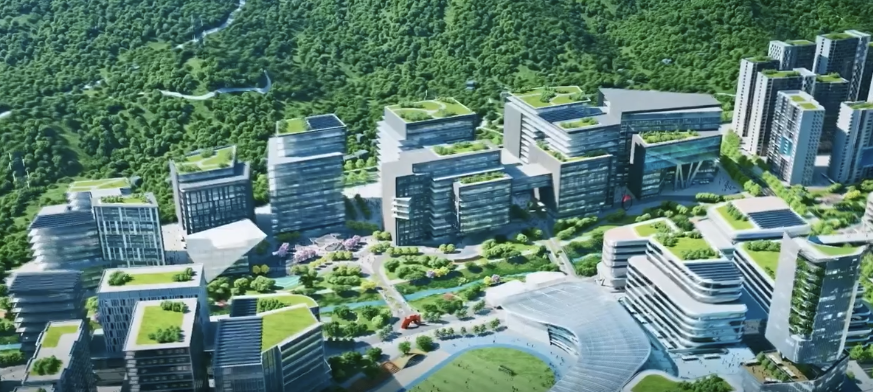
A groundbreaking ceremony for the Range (Hong Kong) Sandy Ridge Data Facility Cluster was held and hosted by the Range Intelligent Computing Technology Group Company Limited – a significant event pinpointing the development of a new technology and innovation policy in the HKSAR. Government officials who attended the ceremony included Permanent Secretary for Innovation, Technology and Industry, Kevin Choi, and Acting Commissioner for Digital Policy, Daniel Cheung. The Range’s chairman, Zhou Chaonan, and general manager, Li Li, also attended. The Sandy Ridge Data Facility Cluster, which occupies 110,000 square metres, is a critical part of NM’s innovation and technology strategy.
Legislative streamlining and higher education integration
The land for the advanced data cluster was awarded through a public tender on March 2, 2026. The Range got a 50-year land grant, and it was the sole bidder of the project (South China Morning Post, March 28, 2026). The cluster will operate in 2029 with an initial investment of HK23.8 billion in the first three years, and with an expected economic output of HK4.6 billion and 180 new technology-focused jobs. In 2032, the cluster will provide a massive 180 exaflops of computing power.
According to Secretary for Innovation, Technology and Industry Sun Dong, the cluster will “solidify the city’s leading position as a data connectivity hub connecting China and the world” and it will “strengthen the deep integration of artificial intelligence and industrial development, which resonates with our country’s strategy of implementing AI Plus” (South China Morning Post, March 28, 2026). Obviously, NM is a crucial part of the innovation and technology policy of making full use of the HKSAR as a super-connector, connecting the mainland with the world on the one hand and tapping into the Chinese Mainland’s fast and advanced technological advantage on the other.
The development of the Northern Metropolis in Hong Kong has entered a breakthrough stage, but its further development will necessitate more efforts of intra-governmental coordination amid a strong leadership
On March 29, Bernadette Linn told the media that dedicated legislation that would streamline statutory procedures would speed up the projects and development of the NM by one year (South China Morning Post, March 29, 2026). The proposed legislation would include six subsidiary laws that would aim at removing obstacles to the process of developing the NM, while increasing the residential components of some developmental sites to lure investment from land developers. The megaproject of developing the NM was announced in 2021 but its process of development was relatively slow.
Mobility, connectivity, and policy learning
Chief Executive John Lee has decided to expedite NM’s development by aligning it with the mainland’s five-year plan. New measures to speed up the NM include the establishment of statutory firms, the faster process of land resumption payments and the adoption of new technologies of railway construction by using the mainland’s standards. Moreover, the process of changing land use is going to be streamlined by reducing the review by the Town Planning Board from two to one round, thereby shortening the consultative process to two months. At the same time, the green belt land, country parks and areas of ecological value will be excluded to strike a balance between development and sustainability.
On March 31, Chief Secretary Eric Chan led a delegation, including Secretary for Education Christine Choi, Undersecretary for Commerce and Economic Development Bernard Chan and Head of the Chief Executive’s Policy Unit Stephen Wong, to Zhejiang, Beijing and Xiong’an New Area (Hong Kong Standard, March 30, 2026).
The delegation included members of a working group on the planning and construction of the University Town under the Committee on Development of the NM. Most importantly, the representatives of the eight HKSAR government-funded universities joined the delegation – a sign showing that the government is keen to mobilise local universities to learn from the mainland’s experiences to develop the NM’s University Town in a more effective way. In particular, the Xiong’an New Area in Hebei is regarded as China’s national developmental strategy and, as such, learning from its rapid development has implications for policy learning in the construction of the University Town in NM.
Strategic financing and strategic challenges
The University Town, according to Secretary for Education Christine Choi, is planned to cover 101 hectares across Hung Shui Kiu, Ha Tsuen, Ngau Tam Mei and the New Territories North (Hong Kong Standard, March 26, 2026). The initial phase of University Town in Hung Shui Kiu and Ha Tsuen has been expanded to nine hectares with the first three plots to be released in 2026. The government has established a HK$10 billion loan fund to support the infrastructure development of self-financing institutions.
Unlike the Macau-Hengqin Cooperation Zone in which a joint co-governing model has been formulated more easily, the Northern Metropolis is ironically more developmentally complicated
With regard to transport networks in the NM, Secretary for Transport and Logistics Mable Chan stated that multiple projects are accelerated, including the surveying process of the Hong Kong section of the Hong Kong-Shenzhen Western Rail Link with the objective of tendering for detailed design and construction in 2027 for a targeted completion in 2034 and opening in 2035 (Hong Kong Standard, March 26, 2026). Other projects include the new Kwu Tung station, which is expected to be completed in 2027, and Hung Shui Kiu Station, which is targeted for 2030. Hung Shui Kiu will be positioned as a modern logistics hub and be characterised by a smart and green mass transit system, with the first phase expected to be tendered in late 2026. At the same time, the government will promote the development of the low-altitude economy in 2026 and explore the development of cross-boundary logistics and passenger flights connecting NM with Shenzhen and Guangzhou more easily.
On March 30, the University of Hong Kong (HKU) started to explore a potential bond issuance to finance its expansion into the University Town by holding a two-day non-deal roadshow (NDR) arranged by HSBC (Hong Kong Standard, March 30, 2026).
Comparing the Northern Metropolis and Hengqin models
Objectively speaking, since the HKSAR government published its action plan for the development of the NM in 2023, the process of development has been accelerated prominently, especially after John Lee’s chairmanship of the first work meeting of the Committee on Development of the Northern Metropolis in September 2025. The most recent developments can be hailed as a successful breakthrough. Challenges remain. The first challenge is to speed up the process of developing the University Town. Another challenge is to speed up the transportation networks without which people from other areas cannot and will not easily move to reside in NM. This second challenge must be tackled by a more rapid development of the residential sites without which local land developers may lack sufficient incentives.
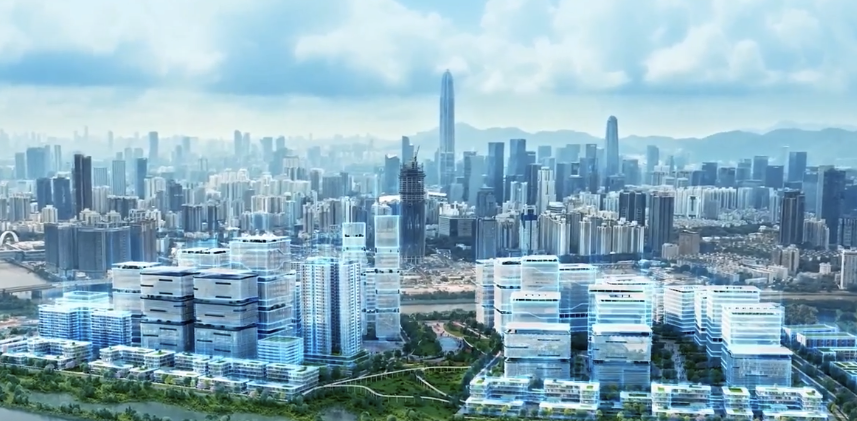
The most important challenge to the NM’s development is how to make the construction of the four zones more balanced: (1) high-end professional services and logistics hub; (2) innovation and technology zone; (3) boundary commerce and industry zone; and (4) blue and green recreation, tourism and conservation circle. At present, the innovation and technology zone is developed in a much faster way than the other three zones. Ideally, a specific timeline for completing the four zones will have to be delineated with key performance targets set within their own timeframe.
Perhaps the central authorities in Beijing fully understand the complexities of Hong Kong, including the more complicated consultative process of land use in the HKSAR and especially the different legal system compared with the Macau-Hengqin CZ which utilises the mainland-initiated laws, regulations and notices. Therefore, this explains why mainland authorities often emphasise the importance of the executive-led governance in the HKSAR.
Governance, integration, and GBA vision
The Macau-Hengqin CZ is characterised by a co-governing structural mechanism in which there is a top-level management committee with top officials from Macau and Guangdong sides. The Northern Metropolis is located within the HKSAR. Theoretically and practically speaking, it should be much easier for the government to control and develop. Yet, the traditional approach of deliberation consultation in land use, the need for resumption and requisition of land, and the difficulties of mobilising local land developers to invest make NM’s development even more complicated and time-consuming than the Macau-Hengqin CZ. Sooner or later, the HKSAR side will have to enhance cross-boundary communication with Shenzhen so that the Hong Kong-Shenzhen Western Rail Link will be built and completed in a more efficient way.
The broader implications for the development of the Northern Metropolis, and that of the Macau-Hengqin cooperation Zone, are geo-politically, socio-economically and technologically significant. Geopolitically, the development of NM and Macau-Hengqin CZ belong to the Chinese Mainland’s long-term developmental blueprint in which Hong Kong and Macau have their special functions that are going to integrate with Shenzhen and Zhuhai respectively. Amid US-China trade and technological tensions, the GBA has already been designed by Beijing to become a southern Chinese economic powerhouse.
In conclusion, the development of the Northern Metropolis in Hong Kong has entered a breakthrough stage, but its further development will necessitate more efforts of intra-governmental coordination amid a strong leadership. Unlike the Macau-Hengqin Cooperation Zone in which a joint co-governing model has been formulated more easily, the Northern Metropolis is ironically more developmentally complicated. Still, with political will and leadership in place, the completion of the Northern Metropolis will be a matter of time, thereby equipping the HKSAR well into a more speedy and much deeper functional and territorial integration into the GBA.
https://macaubusiness.com/opinion-new-developments-of-the-northern-metropolis-comparisons-and-contrasts-with-macau-hengqin-cooperation-zone/

Comments
Post a Comment